

Wire Balustrade Posts


Get a Quote
Posts & Wire Balustrade
3 easy steps
 | Click the Start Now button below |
 | Provide a few project details and sketch/plan and/or photos |
 | We'll review your project and be in touch ASAP |
- residential decks
- alfresco areas
- stairs
- commercial projects
- boardwalks
Wire balustrade posts are used to support the tensioned stainless steel wire in modern cable and wire balustrade systems for decks, balconies, stairs and outdoor living areas.
Our range of wire balustrade posts includes both stainless steel 316 posts and powdercoated aluminium posts, designed for durability, strength and long-term corrosion resistance in Australian outdoor conditions.
Choose from pre-drilled off-the-shelf posts or premium customisable posts for non-standard installations. All posts are designed to suit standard wire balustrade kits and stainless steel balustrade wire systems.
Round Posts
Round wire balustrade posts offer a clean, modern appearance and are one of the most popular choices for residential decks, balconies and stair balustrade systems.
Our range includes high-quality round posts for wire balustrade made from marine grade 316 stainless steel, available in either a satin finish or mirror polish.
The standard round stainless post range is a great starting point for most residential wire balustrade projects. These posts come pre-drilled for wire runs, eliminating messy on-site hole drilling and making installation faster.
The premium customisable round stainless post range provides the ultimate flexibility for projects requiring non-standard customisation. Options include different post heights, adjustable base plate angles (for ramps or stairs) and custom wire hole spacing.
Square Posts
Square wire balustrade posts offer a modern architectural look and are available in both stainless steel and powdercoated aluminium finishes.
Durable, strong and visually streamlined, these posts suit a wide range of residential wire balustrade applications including decks, patios, pergolas, balconies, stairs, landings and ramps. Aluminium posts are typically powdercoated in popular Dulux colours for added durability and a clean contemporary finish.
Square balustrade posts are particularly popular for contemporary cable railing systems where a clean, minimal appearance is desired.
Intermediate Wire Balustrade Posts
Intermediate posts, also known as droppers or spreaders, are used between end posts to support the wire runs and help maintain correct wire spacing in wire balustrade systems.
These slimmer profile posts provide a lower cost and more streamlined solution for longer runs, while helping you meet NCC wire balustrade requirements such as maximum wire spacing.
All intermediate posts come pre-drilled and ready for installation with stainless steel balustrade wire and fittings.
How to Choose Wire Balustrade Posts
Choosing the right wire balustrade posts is essential to how your system performs. Posts support the tensioned wire, control spacing, and determine how fittings are fixed at each section.
Most residential systems in Australia use 11 horizontal wire runs with spacing up to 80mm, combined with a continuous handrail across the top of the posts. Correct post selection and layout helps ensure the system can be tensioned properly and remain compliant.
---
Timber Posts vs Metal Posts
The first step is choosing between timber posts and metal posts, as this affects both installation method and fitting selection.
Timber post systems are commonly used on decks and outdoor structures. Wires typically pass through drilled holes, with end fittings fixed directly into the timber or via a fixing point.
Metal post systems (including stainless steel, aluminium and steel) are often used for a cleaner, more architectural finish. These systems typically use pre-drilled posts or threaded, riveted or bracket-style fixing points.
You can explore suitable kits using the filters on this page or by browsing compatible wire balustrade kits.
---
Pre-Drilled vs Custom Posts
Wire balustrade posts may be supplied as pre-drilled or custom posts depending on the project.
- Pre-drilled posts – designed for standard wire spacing, allowing faster installation
- Custom posts – made to suit specific layouts, heights, or fixing methods for more tailored projects
Choosing the right post type helps ensure alignment with your wire, fittings, and overall system design.
---
Post Spacing and System Performance
Post spacing plays a major role in how a wire balustrade system performs under tension.
- Intermediate posts are typically spaced between 1000mm and 1500mm
- Closer spacing allows for better control of wire tension
- Longer spans may require higher tension or additional support
Correct spacing helps maintain consistent wire alignment and reduces movement over time.
Typical wire balustrade layout showing post spacing, wire spacing and handrail configuration:
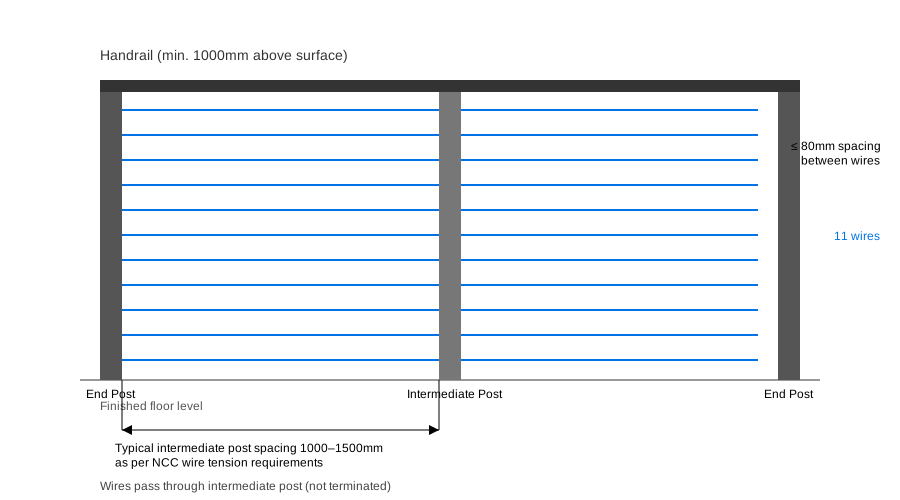
How Posts Work in a Wire Balustrade System
In a typical system:
- End or corner posts anchor the wire and take the load from tensioning
- Intermediate posts guide and support the wire along the run
- A handrail ties the system together and is required in most compliant installations
Depending on the system, fittings may fix directly into the post, pass through it, or connect via a fixing point such as a threaded insert, saddle or bracket.
---
Choosing the Right Posts for Your Project
If you’re unsure which posts to choose, a simple approach is:
- Decide between timber or metal posts
- Choose pre-drilled or custom posts based on your layout
- Confirm compatibility with your balustrade wire and kit system
- Plan your post spacing and layout
This helps ensure your wire balustrade system is both functional and visually consistent.
---
Related Products and Guides
To complete your system, you may also need:
For more information, see:

- Post Wall Thickness 1.5mm Remove This Item
- Post Wall Thickness 2.8mm Remove This Item
- Post Style Intermediate Remove This Item
- Post Style End/Intermediate Remove This Item
- Post Style End/Intermediate Angled Remove This Item
- Post Depth 10mm Remove This Item