

Guide to Styling Your Home with Wire Balustrading
Discover different ideas to style your new wire balustrade. We go into aesthetic recommendations, style combinations and what our customers have used to deliver stunning visuals.
We cover popular looks with different wire balustrading posts, wire balustrading kits, material finishes, common handrails and more.
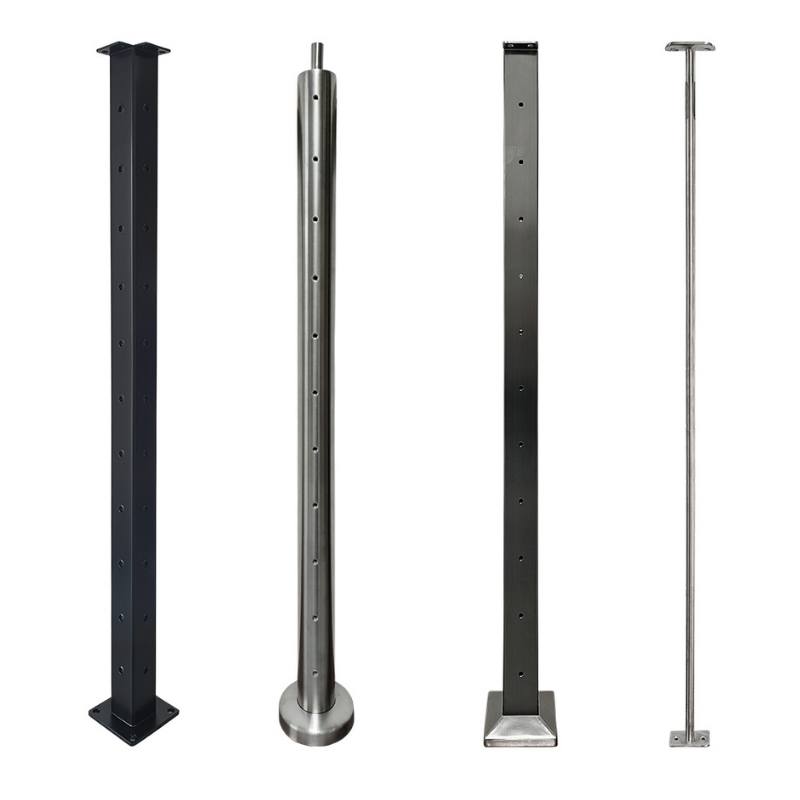
Profile (Post Shape)
The first choice we recommend people make is choosing the shape of their posts.
We supply 50x50mm posts in either square, or round (2" (50.8mm)). The look of these shapes the aesethic of the overall balustrade.
We also supply a range of supporting intermediate posts, which can be used where you have existing posts or as alternatives with our other post layouts.
Square Profile Posts
Square wire balustrade posts offer a modern architectural look and are available in both stainless steel and powdercoated aluminium finishes.
Durable, strong and visually streamlined, these posts suit a wide range of residential wire balustrade applications including decks, patios, pergolas, balconies, stairs, landings and ramps. Aluminium posts are typically powdercoated in popular Dulux colours for added durability and a clean contemporary finish.
Square balustrade posts are particularly popular for contemporary cable railing systems where a clean, minimal appearance is desired.
Most people combine the square profile posts with flat/square handrail - either in timber or appropriate metal. They also use them where they have existing posts that are also square.
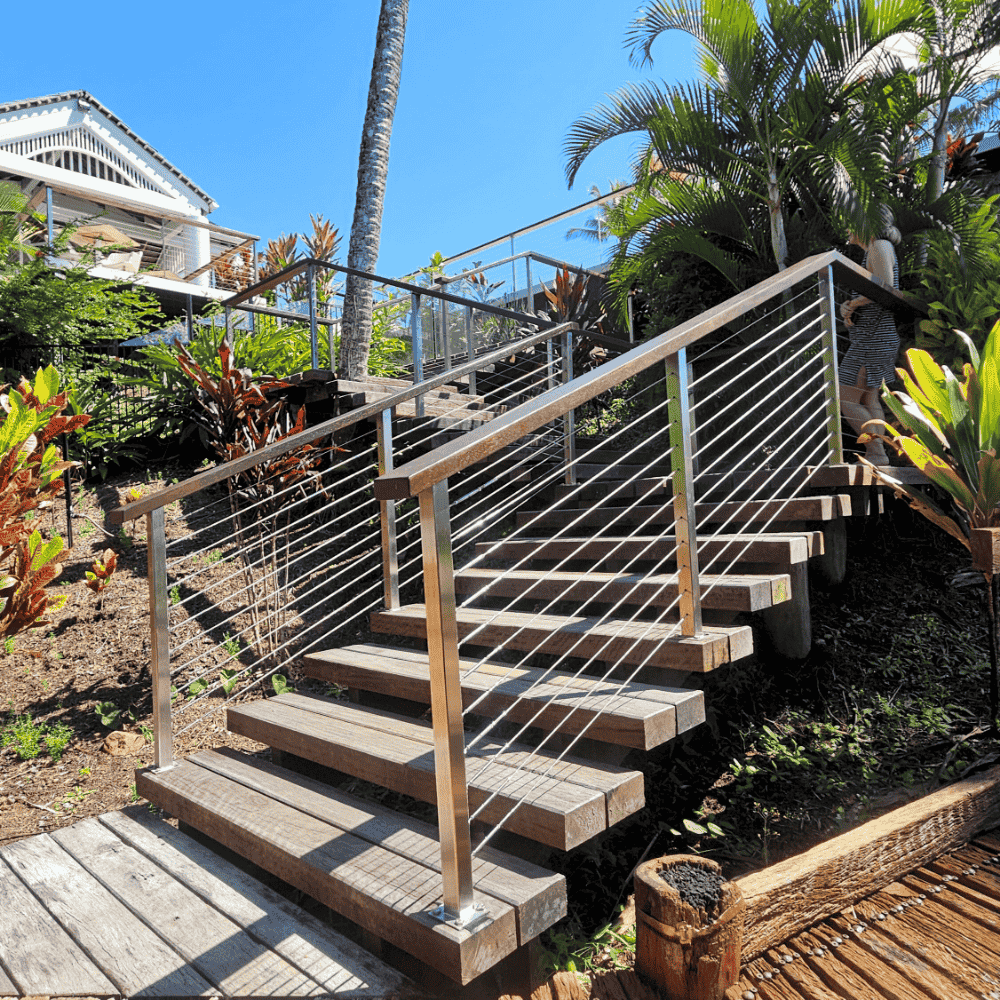
Round Profile Posts
Round wire balustrade posts offer a clean, modern appearance and are one of the most popular choices for residential decks, balconies and stair balustrade systems.
Our range includes high-quality round posts for wire balustrade made from marine grade 316 stainless steel, available in either a satin finish or mirror polish.
The standard round stainless post range is a great starting point for most residential wire balustrade projects. These posts come pre-drilled for wire runs, eliminating messy on-site hole drilling and making installation faster.
The premium customisable round stainless post range provides the ultimate flexibility for projects requiring non-standard customisation. Options include different post heights, adjustable base plate angles (for ramps or stairs) and custom wire hole spacing.
Clients often combine the round post shape with round handrail, creating a more minimal and softer look to their balustrade.
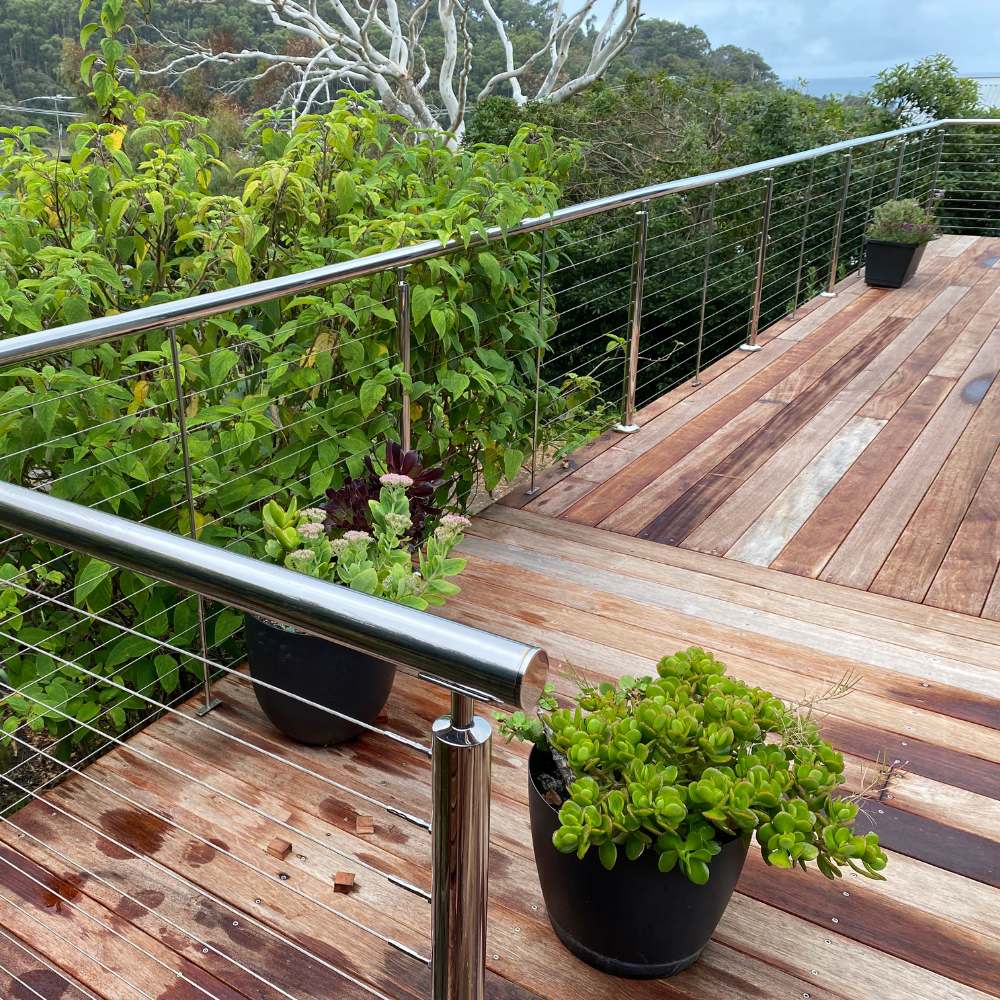
Intermediate Wire Support Posts
Supporting Intermediate posts, also known as droppers or spreaders, are used between end posts to support the wire runs and help maintain correct wire spacing in wire balustrade systems.
These slimmer profile posts provide a lower cost and more streamlined solution for longer runs, while helping you meet NCC wire balustrade requirements such as maximum wire spacing.
Intermediate support posts come in a variety of profiles and sizes including flat bar, rectangular hollow section (RHS), square and round. They are generally defined by their thin profile and smaller size.
These posts are not considered structural. They are not sufficient on their own to support a balustrade. They are not to be used as fixing points for wires.
People use these in-between structural posts. People use Flat Bars typically intersperse them between solid 50x50mm metal or 90x90mm timber posts (or thicker). They help reduce the visual bulk across the project.

Post Material
Stainless Steel 316
Marine grade stainless steel is a strong, resilient material for wire balustrading posts. It has high corrosion protection, even in corrosive environments such as beachside applications and areas subject to salt-spray. Stainless steel is versatile and can be cut and welded easily to make stair posts and other custom posts.
SS 316 is a finished material and doesn't require coatings after it has been produced. It can be kept clean easily and is resilient to tea-staining.
Our stainless posts come in different wall thickness options. Wall thickness is the width of the material used for the post tube.
3.0mm (or 2.8mm) - The thicker material provides better structure to the overall balustrade and handrail. It resists warping and deformation that comes from putting balustrade wires under tension. Due to these properties it is used for any point where you terminate the wire, e.g. ends, corners and middle posts.
1.6mm (or 1.5mm) - The thinner material is lighter weight and cheaper, making the post more affordable. Whilst it is still helpful for wire balustrade structure it is not recommended for fixing wire into as it can deform under tension. It is commonly used for intermediate posts as they don't act as fixing points for the wire. This helps reduce the overall cost of the project. Projects that require sturdier support due to heavier loads should consider thicker material.
6061 T6 Aluminium
The aluminium post range is made from structural 6061 T6 aluminium that provides durability, corrosion resistance and strength to wire balustrades. The proprietary design on these posts uses a unique '+' design with a 4mm wall thickness to provide strength and functionality to the balustrade.
It is designed specifically for use with wire balustrading systems by providing a strong fixing point that doesn't warp under tension. The added wall thickness and design makes it perfect for use as intermediate posts as well.
The material and design makes the posts more affordable.
The aluminium is then powdercoated to provide a durable, weather resistant finish.
Material Finish
The next choice is around aeshetics on the final material look of the posts.
Although there are some practical benefits to the different options!
Satin Finish
This incredibly popular finish is a staple on most projects. It is unobtrusive and solid.
Stainless steel is available in a matte satin finish. A lower grit, often around 320 - 400, provides a muted and robust look to the stainless.
It is seen a lot in inner-city projects; projects the surrounding environment is priortised over architectural detail such as viewing a garden rather than a balustrade; and often where there are different, constrasting surface elements in the overall design as the satin finish reduces visual overload.
It also is very resilient to dirt and debris. The lower contrast means the eye doesn't pick up the dirt as easily as seen on mirror polish.

Mirror Polish
A mirror polish finish provides a reflective, mirror-like finish to the stainless. It's often used in higher-end balustrades where architectural appeal is wanted.
It is not a true mirror, but a reflective surface is created using higher grit polishing, usually around 800-1200 grit. It will pick up surrounding colours and images, although will not be as detailed in its reflections compared to a normal mirror.
It is most often used in beachside applications. In addition to the aesthetic appeal it offers those properties it is also easier to keep clean. The higher grit reduces the hills and valleys found in the stainless, making it more difficult for dust and dirt to cling to it. The smoother surface makes it easier to clean with an appropriate stainless steel cleaner. The trick is that the human eye will pick out a dirty mirror polish surface due to the higher visual contrast between dust and the material, making it look dirtier than it would on a satin finish where the detail is harder to pick out.
Mirror finishes are generally a higher price-point than satin finishes.

Custom Powdercoating
Matte black, monument and white are very popular colours for wire balustrade posts.
Aluminium posts are typically powdercoated in popular Dulux colours for added durability and a clean contemporary finish. The particular combination of the Dulux Protexture range and the 6061 aluminium creates a durable finish suitable in beachside environments.
Most clients try to match an existing colour when selecting their balustrading posts to maintain architectural appeal. Others choose a colour pallette that suits the aesthetic they desire.
Satin finish stainless can be powdercoated, although we do not recommend it in corrosive environments such as beachside applications or areas subject to salt spray. A range of powdercoats aren't rated for use in these areas with stainless steel as the substrate and we just don't know how long they will last, or whether colour will fade and wear over time.

Popular Colours
Here are some of the most popular colouring options for wire balustrade posts.
Matte Black
Matte black is an incredibly popular finish in suburban and rural homes, and commercial properties. The black makes it look like the balustrade disappears into the background. This promotes views across expansive rural landscapes or your garden. It works well as a higher quality aesthetic in interior spaces and commercial environments.
Clients pair the matte black posts with BlackLine wire balustrade to create a hidden aesthetic.
Others pair it with stainless wire balustrade to create a contrast and modern colour pallete.
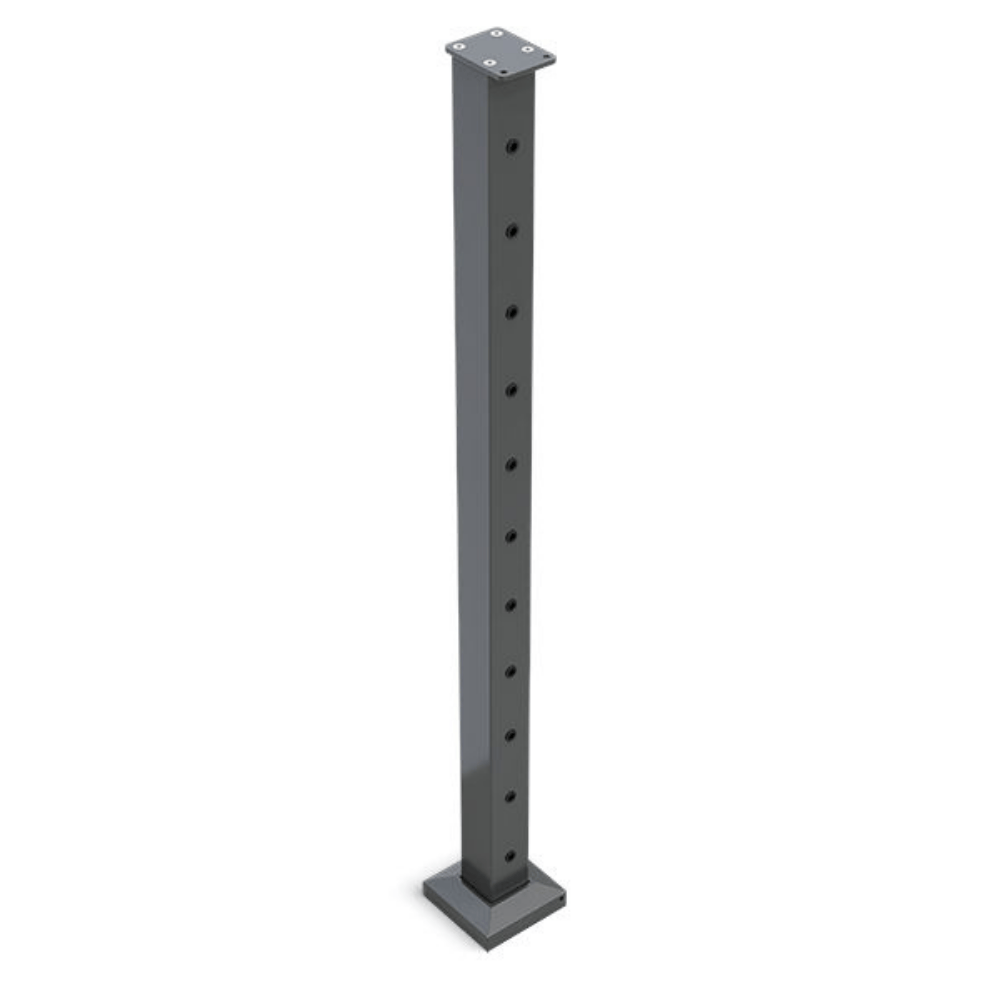
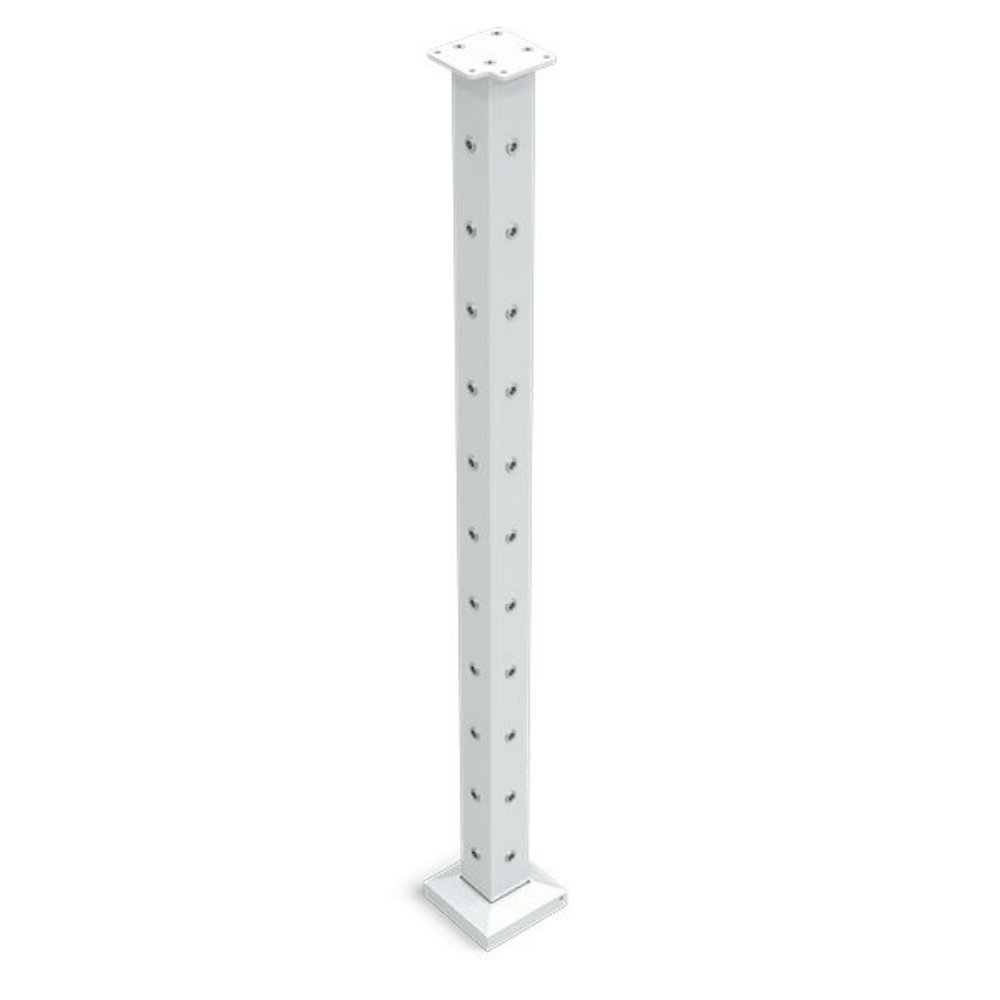
White
White is most often used in beachside applications to create a brighter aesthetic to a home or to complete a white render (or yacht!).
It is often paired with stainless steel wire and fittings to promote architectural appeal. You can see it used in properties around marinas, beachside homes and expansive homes.
Whilst white looks amazing it is important to keep it clean as any dust and debris will be noticed easily.
Monument
With a lot of properties around Australia using Monument in their facade, many clients seek out a similar Monument colour. The Aluminium posts can be powdercoated in the popular Dulux Protexture Monument colour for added durability and a clean contemporary finish.
Similar to black, clients pair it with BlackLine wire balustrade or stainless balustrade to create a particular colour pallet.

Protexture Range
Here are some of the other colours available for the aluminium posts in the Dulux Protexture Range
Handrail Types
The handrail you choose creates not only a specific look but a unique experience.
Here are some of the common handrail options we see with wire balustrade.
If you require a 1000mm (1m) height balustrade you need to consider the width of the handrail combined with the effective height of the posts. For example, a 960mm (common height) post would require a 40mm handrail to reach the 1000mm height.
Flat Handrail
Flat handrail is a popular choice for wire balustrading. It provides a robust feel to the balustrade and a comfortable platform for leaning on. There are lots of versatility in flat handrail options.
Timber is a very common choice. There are many different types of timber to use as a handrail with many different profiles available from timber merchants. Have a discussion with your local timber merchant to see what is available, what you like the look of, the structural benefits of different types and how to maintain it. The balustrading posts we supply have screw holes so you can fix the timber handrail straight on top.
Steel or aluminium are other choices. They can provide different structural benefits to the overall balustrade. Some people choose to powdercoat the metal to create a unique look to the balustrade. Just make sure you consider dissimilar metal corrosion effects when selecting your post and handrail materials. Talk to your local handrail supplier for options.
We don't supply any flat handrail or square handrail fittings.

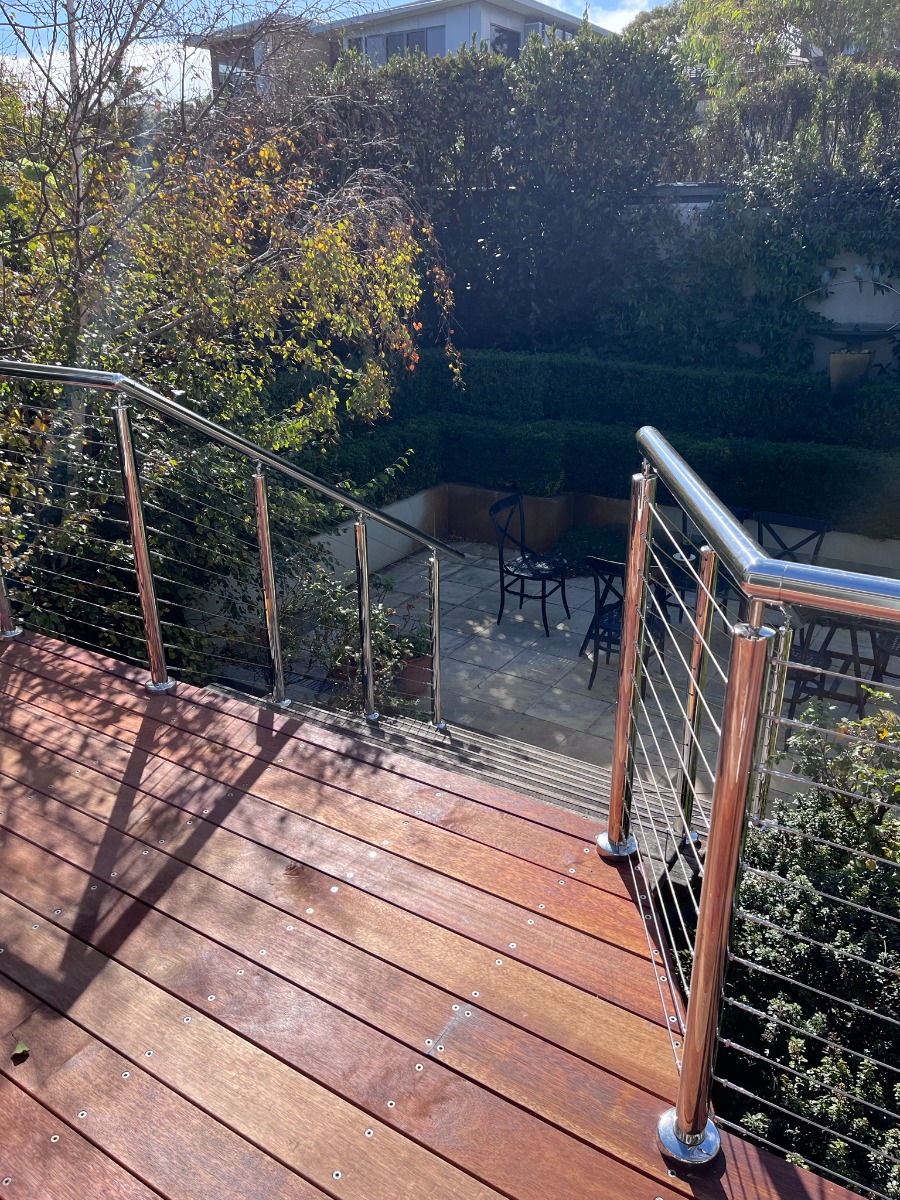
Round Handrail
Round handrail is a great aesthetic choice for wire balustrade. It provides a smooth look and feel to the balustrade. It can be easier to grip onto than flat handrail and provides a more comfortable feel to the user.
Round stainless handrail can be very easy to clean as well. The smoother finish reduces the ability for dirt to build up while making it easier to wipe clean.
Most clients pair round handrail with round posts. If you are considering round handrail with square posts we only have the Standard Modern Square Range available for this scenario.
Round handrail however is more difficult to install. Corner and intermediate transitions require precision, planning and the right fittings. If you have a stair-landing-stair transition and are looking at round handrail you may need to consider on-site fabrication to properly manage complicated nature of the turns.
We only supply 2" Round Tube in satin or mirror polish for pickup from our Moorabbin store or direct from our supplier in select major cities. Shipping only available to accessible commercial sites, not residential addresses.
Post Styles
Each wire balustrading post has a specific purpose. Choosing the right one is important as it provides a certain functionality needed in the overall system.
Take a look at where each style of post is commonly used.
By the way, we do most of this heavy lifting when quoting for you to ensure compatability between our posts and wire balustrading systems. However, it is still important for you to know so you know which piece goes where when installing.
End Posts
End Posts are used to terminate wires on horizontal sections. It is also used to denote the end of a handrail section and provide a solid post for the balustrade and handrail.
End posts are drilled for wire balustrading kits on a single side of the post (there is an exception to this outlined below). The top plate is aligned with this side of holes.
The top plate used changes depending on the range. They are denoted by a single-sided tab or intermediate saddle. Handrail sits in a straight line on top of this, usually with an small extension past the post.

Corner Posts
Corner Posts are used to change the direction of handrail and wire balustrade at 90°. Wire is stopped on one side of the post and started on the other - it is not advisable to run the wire through the post due to increased wear and reduced tension.
Top plates are set at 90° with holes set on two sides at 90° inline with the top plate.
Corner posts can also be used with pivoting kits to change directions on a run (e.g. 60°). Handrail needs to be modified accordingly.
Wire balustrade kits are matched in the same way as end posts.

Intermediate Posts
Intermediate Posts are used to support wires, allowing tension requirements to be met on balustrades without having to start new runs.
Top plates are set at 180° with tabs extending both sides to support the handrail. Holes are set on two sides at 180° inline with the top plate.
Intermediate posts are a staple in most balustrades. 50mm versions are common across all the ranges. These also provide handrail support.
Intermediate support posts (outlined above) are a version of intermediate posts.

Middle Posts
Middle Posts are used to advance the direction of handrail and extend the wire balustrade at 180°. Wire is stopped on one side of the post and started on the other.
Middle posts are commonly used to create new fixing points for wires on long runs. If a balustrade kit can't reach sufficient tension on a long run, a middle post can be installed to terminate the wire earlier, and provide a fixing point to start a new run on the other side.
As an example, imagine that a straight section of 20m is required. Instead of using a single kit across the 20m (and not being able to get to a safe tension), instead split the length into 10m runs. This makes it easier to get sufficient tension on the wire.
Middle posts can also be used with pivoting kits to change directions on a horizontal run (e.g. 135°). Handrail needs to be modified accordingly.
Wire balustrade kits are matched in the same way as end posts.
Angled End Posts
Angled End Posts are used to terminate wires on angled sections such as stairs or ramps. It is also used to denote the end of a handrail section and provide a solid post for the balustrade and handrail.
Depending on the range, the post has a adjustable saddle, is welded to the angle or is cut and screw fixed to the angle. Either way, the top plate is set in-line with the handrail and holes.
Wire is fixed to a single side of the post. Holes are custom drilled.
Angled posts are always custom fabricated. See below for more information on stair/ramp balustrading posts.

Angled Intermediate Posts
Angled Intermediate Posts are used to support wires, allowing tension requirements to be met on stair or ramp balustrades without having to start new runs.
Depending on the range, the post has a adjustable saddle, is welded to the angle or is cut and screw fixed to the angle. Top plates are set at 180° with tabs extending both sides to support the handrail.
Holes are set on two sides at 180° inline with the top plate. Holes are custom drilled.
Angled posts are always custom fabricated. See below for more information on stair/ramp balustrading posts.

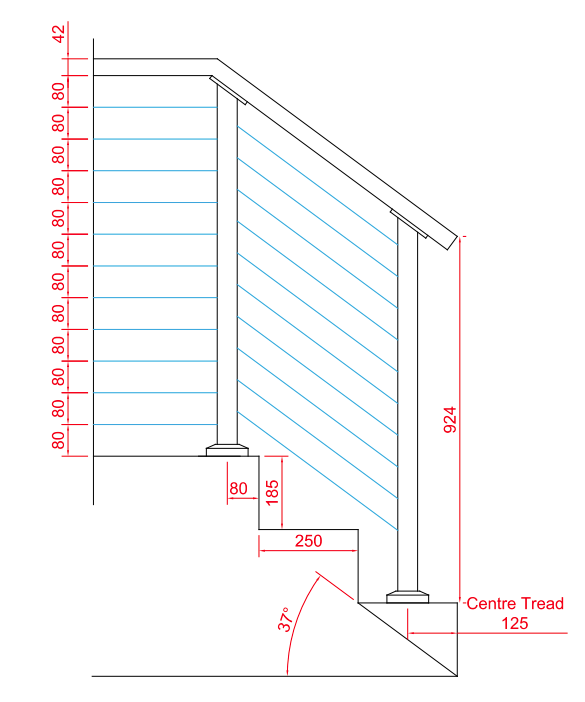
Corner Transition Posts
Corner Transition Posts are used to terminate wires on angled sections such as stairs or ramps and terminate wires on a corresponding horizontal section 90° to the stairs. It can also be used to help transition the end of a horizontal handrail section to a stair handrail.
Depending on the range there is a different solution to this problem. Some ranges can accommodate this transition easily, while others have limitations. It is best to talk to us to work out your options.
Holes are set in-line with a horizontal section and are custom-drilled for the angle section.
Angled posts are always custom fabricated. See below for more information on stair/ramp balustrading posts.
Intermediate Transition Posts
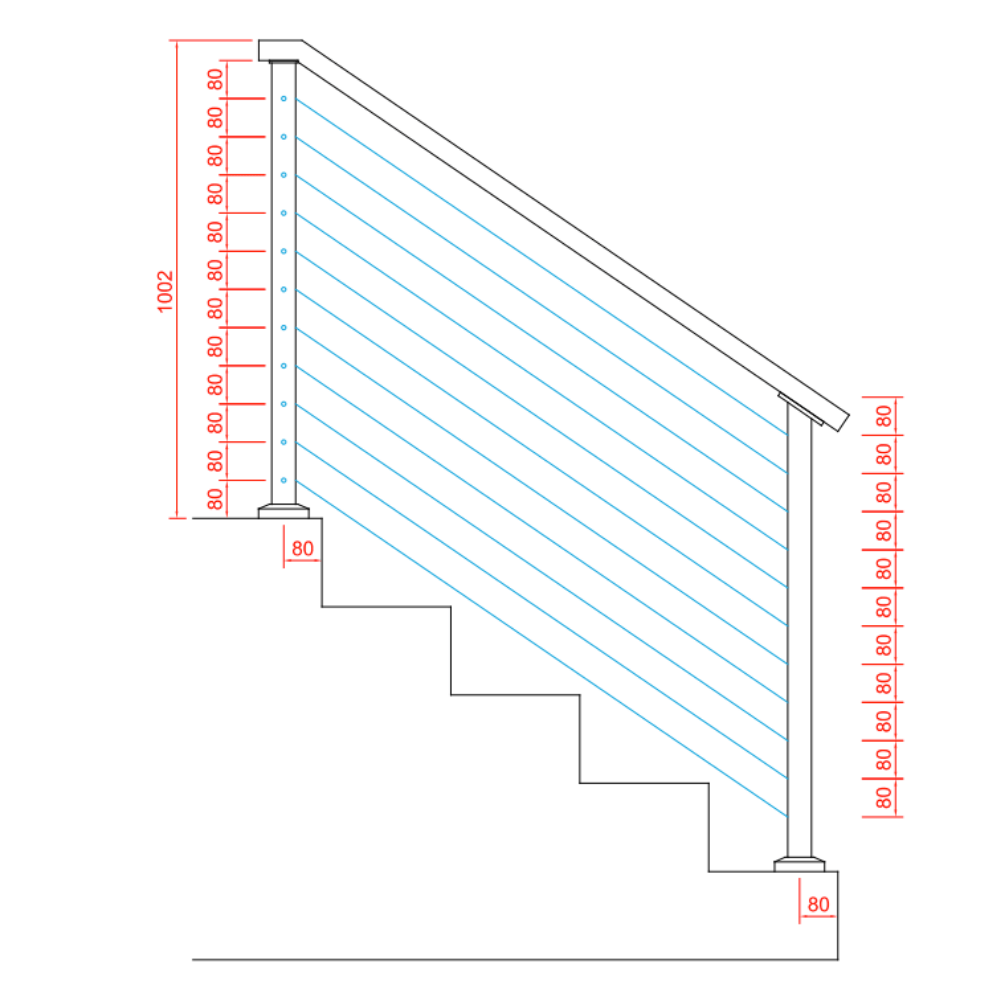
Intermediate Transition Posts are used to terminate wires on angled sections such as stairs or ramps and terminate wires on a corresponding horizontal section 180° to the stairs. It can also be used to help transition the a horizontal handrail section to a stair handrail.
Depending on the range there is a different solution to this problem. Some ranges can accommodate this transition easily, while others have limitations. It is best to talk to us to work out your options.
Holes are set in-line with a horizontal section and are custom-drilled for the angle section.
Angled posts are always custom fabricated. See below for more information on stair/ramp balustrading posts.
Wire Balustrade Styles
Here are some of the common aesthetic combinations we see for wire balustrade posts, wire and handrail.
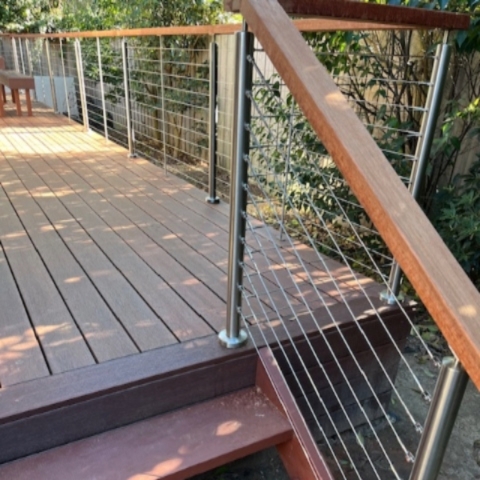
Stainless Round Posts, Stainless Round Handrail & Stainless Fittings
Stainless round posts, stainless round handrails and stainless wire balustrade are an incredibly popular choice.
They produce a softer appearance to the balustrade and the shape and diameter of the handrail make it easier to hold on.
The stainless wire completes the look by matching the colour of the posts and handrail.


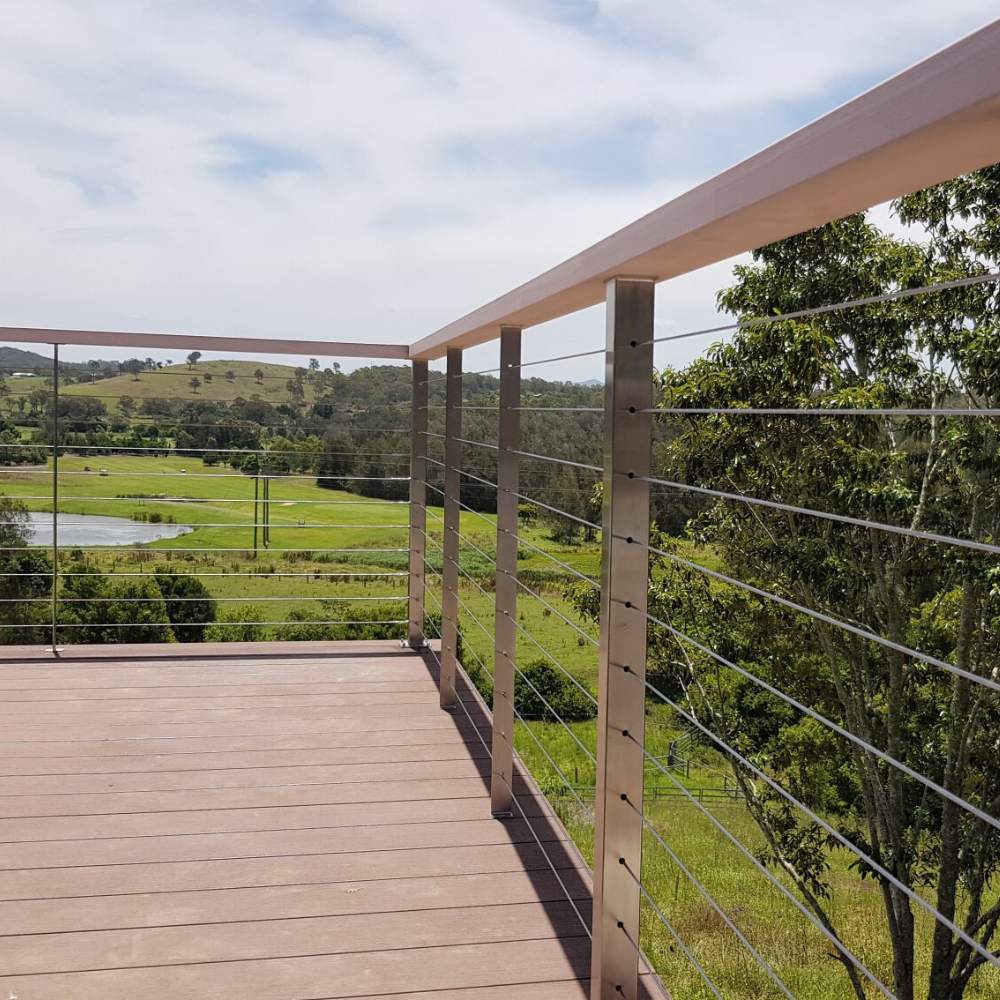
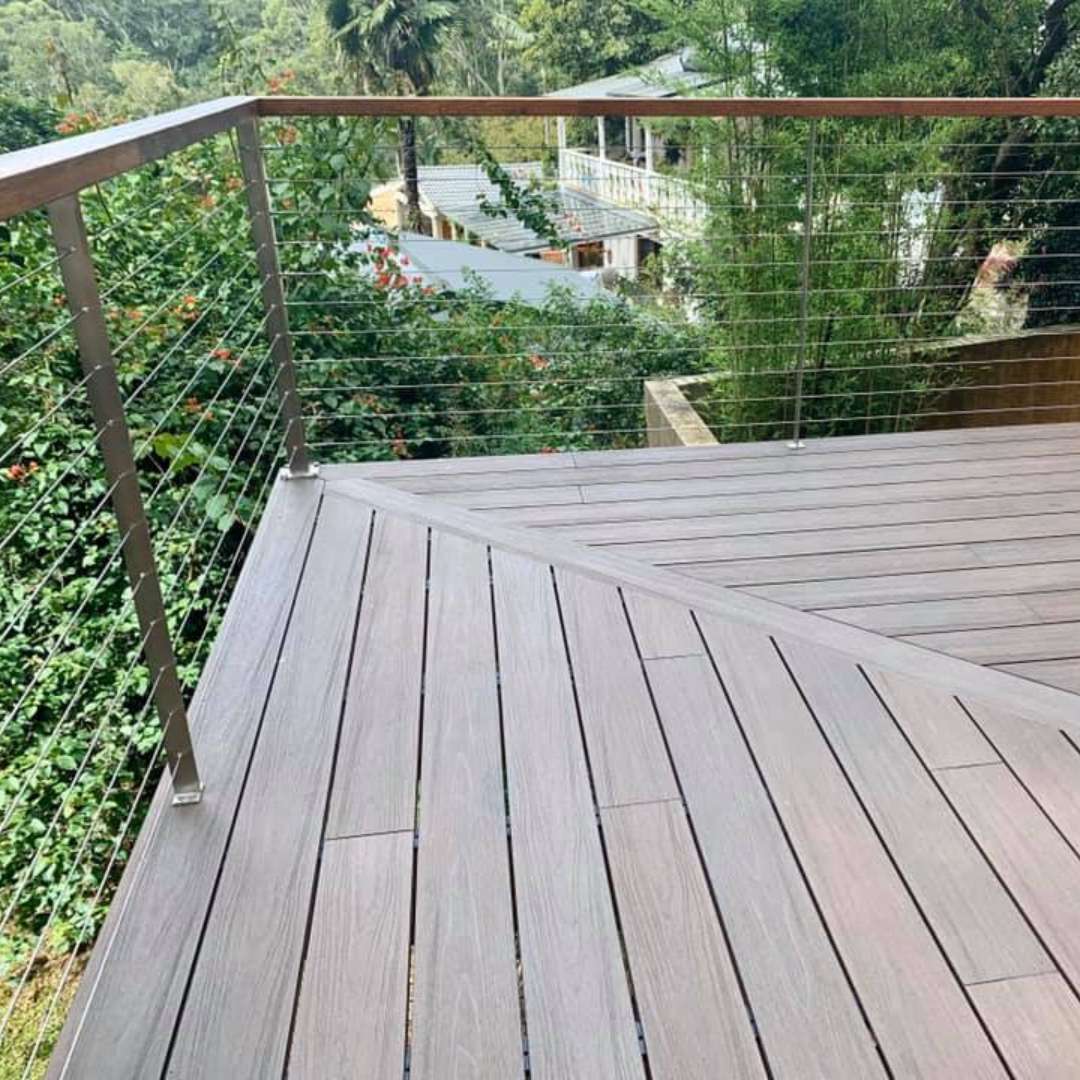
Stainless Square Posts, Timber Flat Handrail & Stainless Fittings
Stainless square posts, flat timber handrails and stainless wire balustrade offer a robust look to the balustrade.
The structure works well with stronger, squarer facades and provides a solid but quality finish with the smooth stainless.
The stainless wire is still visually minimal and works with the square profile to create a frame for views.
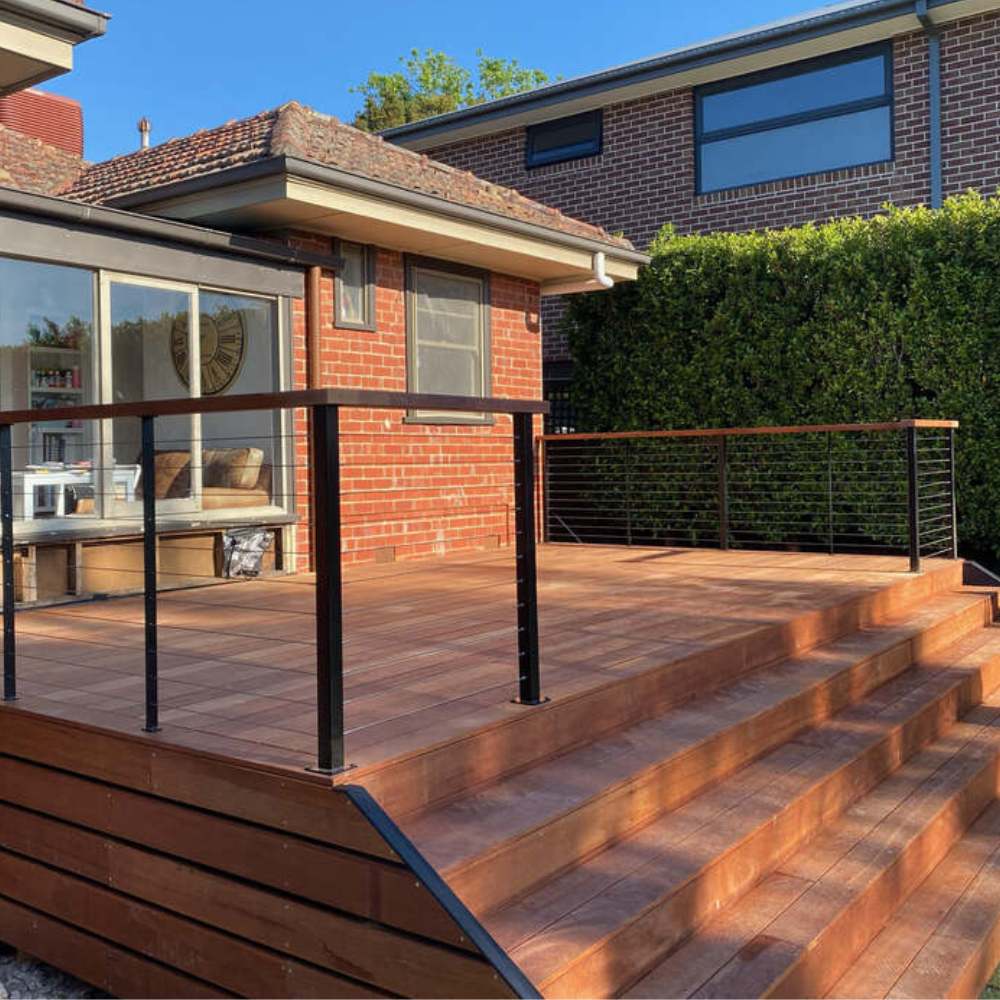
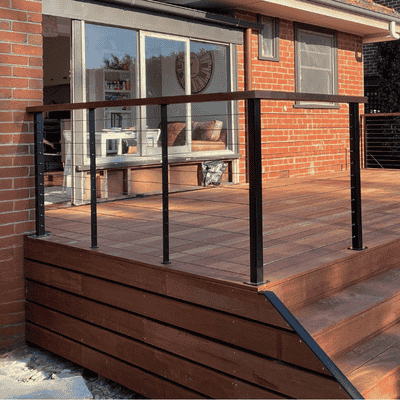
Black Square Posts, Timber Flat Handrail & Black Fittings
Black square posts, flat timber handrails and black wire balustrade create a hidden feel to the balustrade.
The black hides away in the shadows works while still providing a solid and quality finish.
The black wire reduces the obstruction of the view.
Looking for more inspiration? Here are some more ideas...
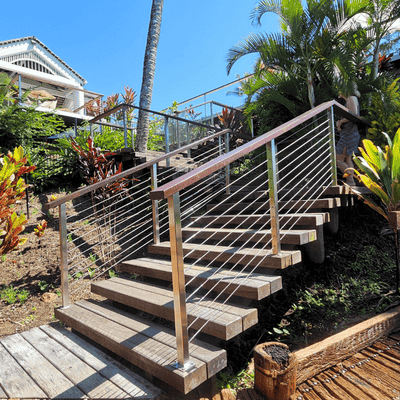
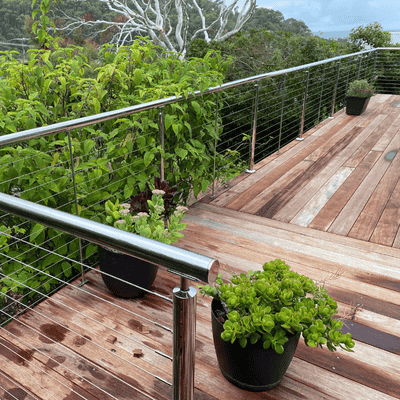
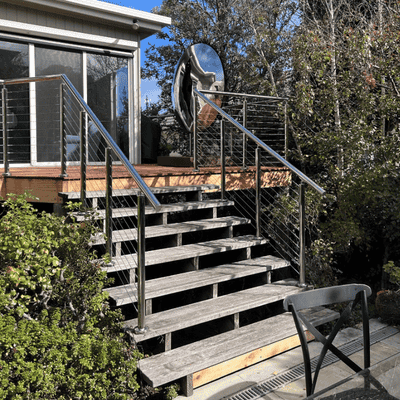
Recent Customer Projects

Wire Balustrade Post Guides & FAQs
Looking to get a project together?
→ Browse Wire Balustrade Posts, then match them with the right kits and wire.