

How do I install wire balustrade into Metal Posts?
Super common question.
There are two main structural posts people use for balustrades - Timber or Metal. For our install into Timber guide click here.
Metal Posts have a lot more variance in their design for which there are many different wire balustrading solutions.
When we are talking about installation into the post we are working with the fixing point into the post. The style of kit (bottlescrews vs terminals etc) is often mostly irrelevant as they can be combined with different attachments and into different fixings to get the style you are after.
There are 5 primary methods of fixing balustrading into posts. We'll go through their suitability for certain kinds of posts and angles, as well as their ease of install, need for additional tools and general costs.
Note: If you already have pre-threaded posts it is often easier and cheaper to stick with those. A lot of the stainless and black aluminium posts we sell come with pre-tapped threads or RivetNuts can be installed during manufacturing which, if you don't have the tools for that already, is often the best method to go with. But, if you have existing posts or want to DIY, this is a guide for how to choose fixings.
Flip Lock Nuts
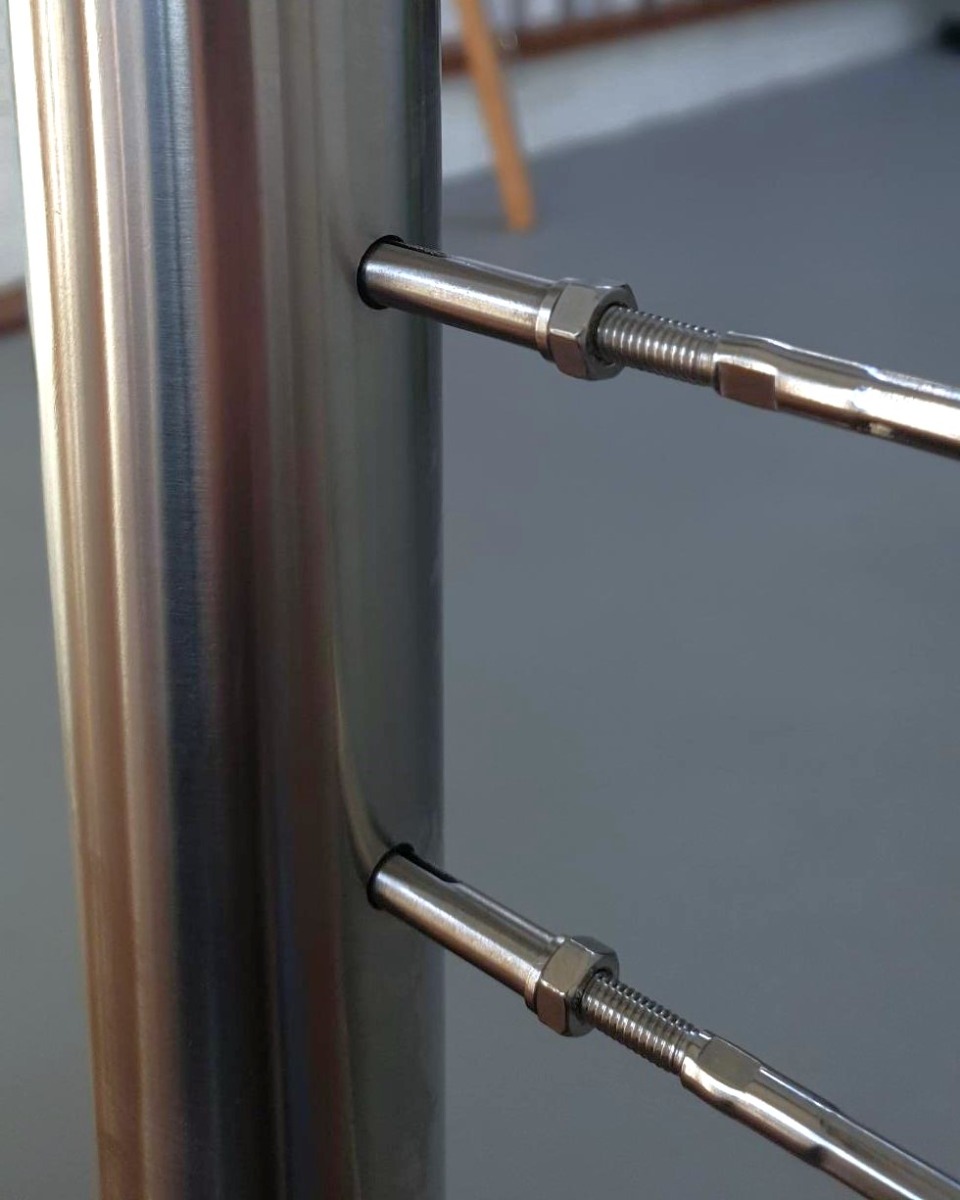
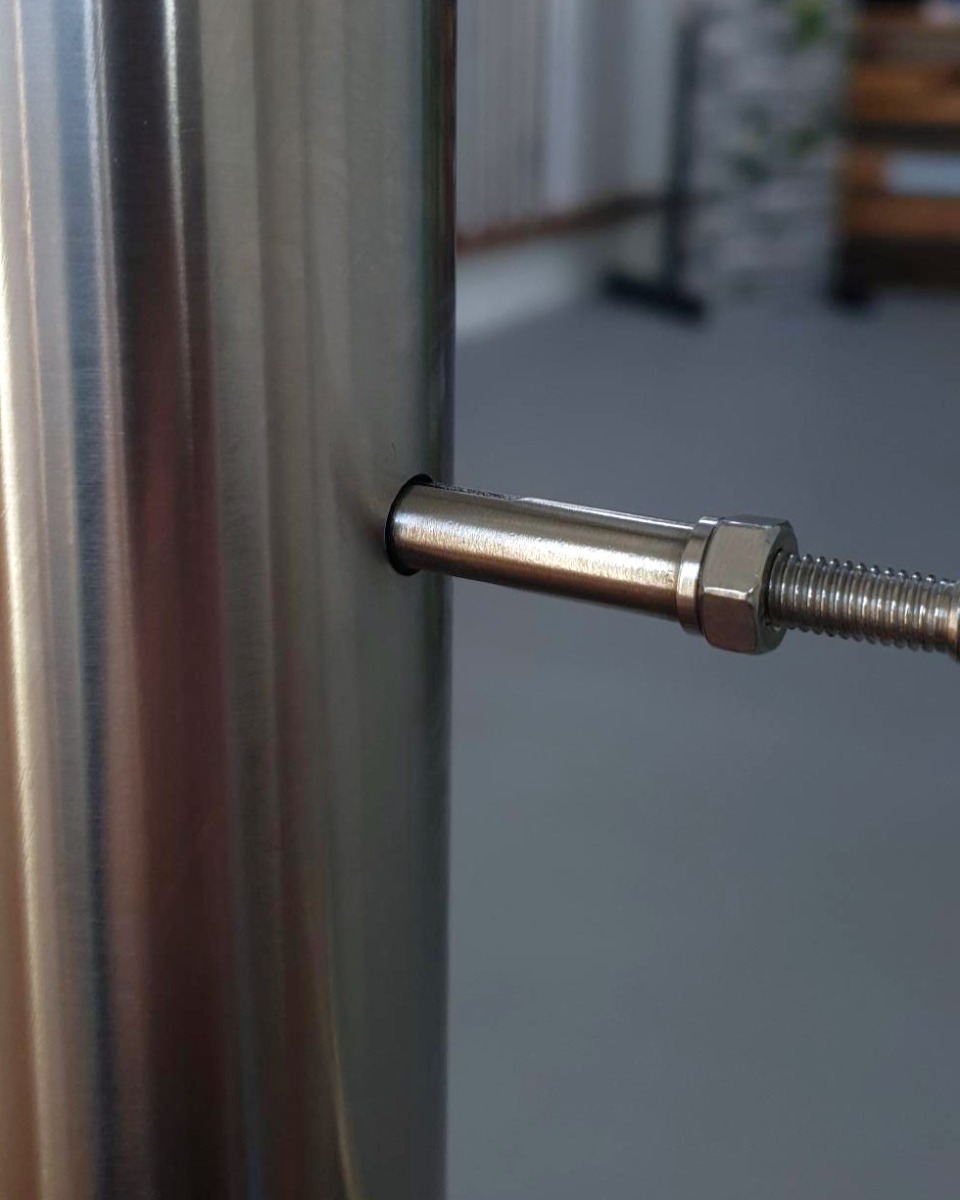
Flip Lock Nuts are an incredibly versitale and easy to install option. They don't require any additional tools (other than a metal-drilling drill bit), work on stairs/ramps and larger wall-thickness posts.
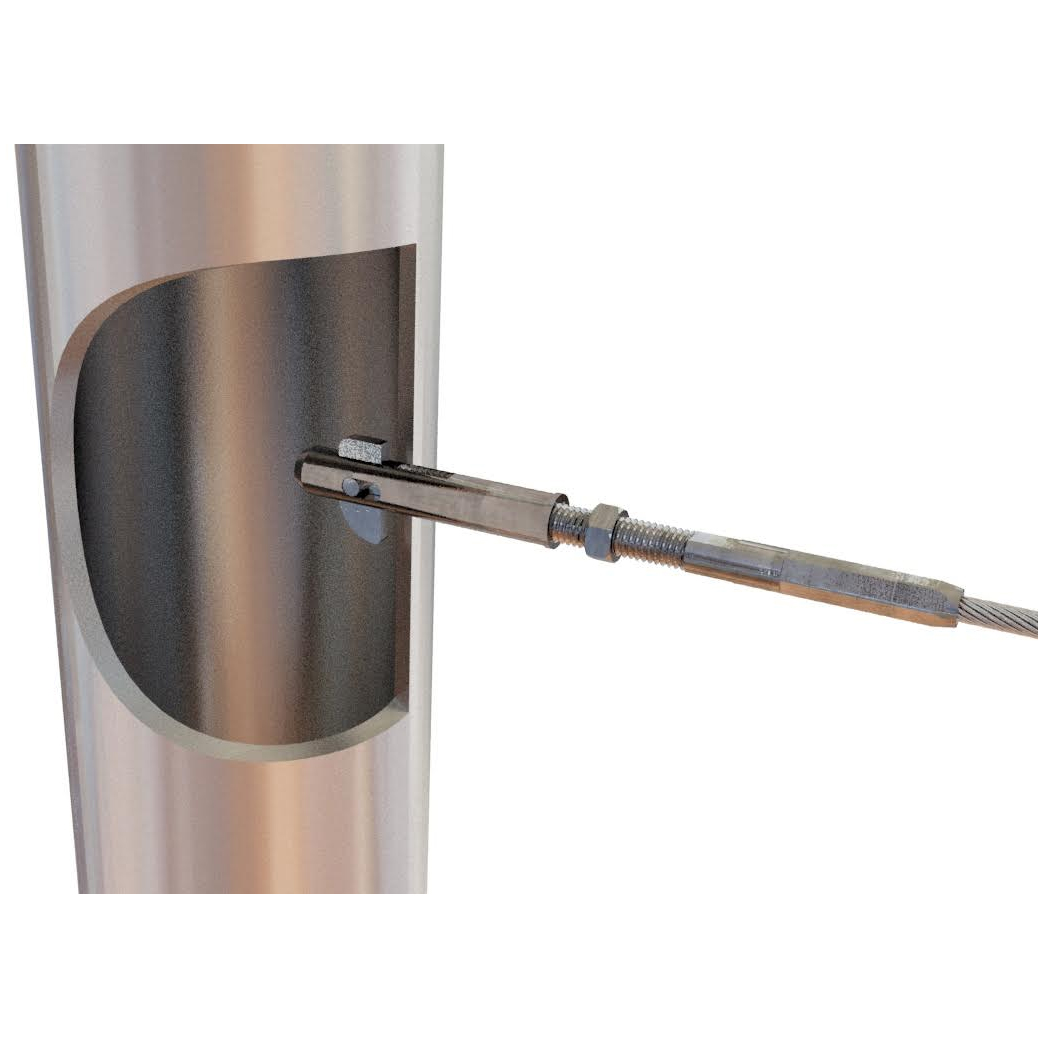
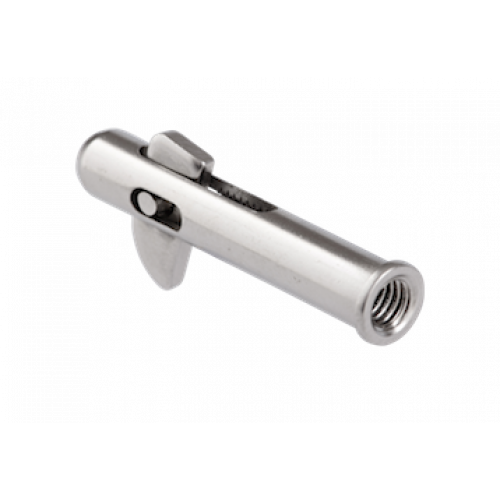
They work by a small flip toggle that, once inserted into the post, drops down to secure against the inside wall when under tension. They come in RHT and LHT female-thread variants for M6 threaded fittings. (No, it's not a swage terminal in and of itself, you connect it to one). Holes can be drilled on angles to work on stair sections.
If you want something that keeps things neat, minimal and tidy while being easy to install these could be your answer.
Flip Lock Nut Installations
Cost-Effectiveness
Flip Lock Nut Kits
Straight & Angled Sections
316 Stainless

Straight & Angled Sections
316 Stainless

Straight & Angled Sections
316 Stainless

Straight & Angled Sections
Black Stainless

Straight & Angled Sections
316 Stainless

Straight & Angled Sections
316 Stainless

Rivet Nuts (RivNuts)
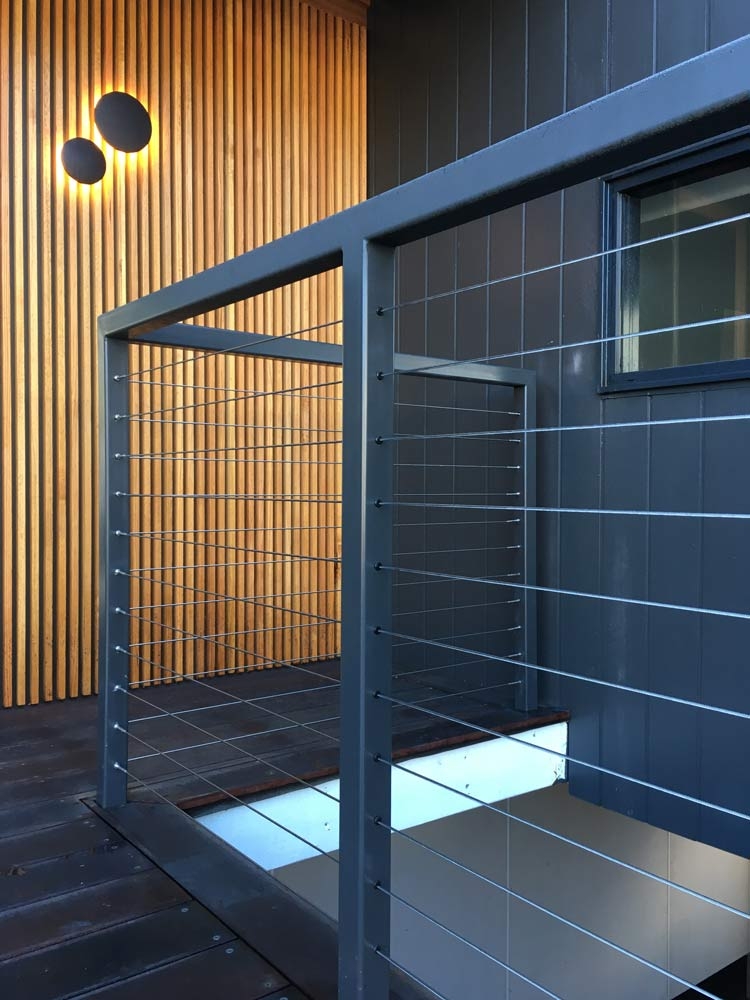
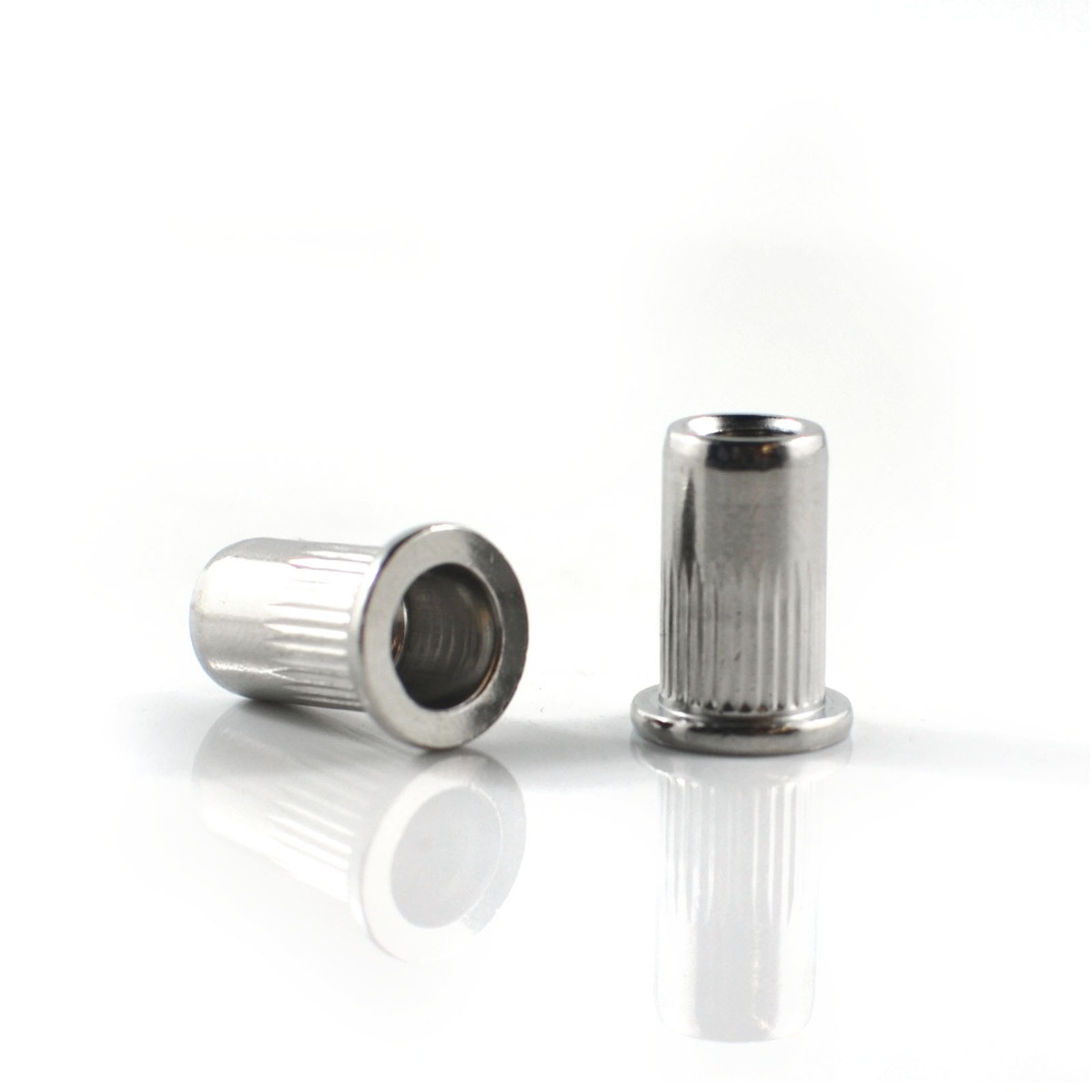
Rivet Nuts (also known as RivNuts) allow for threaded terminal ends to go into the post. They are the metal sister to threaded timber inserts and are often a replacement for thread tapping. They allow for very streamlined kits and when paired with swivel connectors or mini eye bolts allow fittings to pivot.
There are options that work with M6 LHT and RHT fittings, and M8 RHT fittings. There are also variants that work with a variety of wall thickness posts from 1.0-6.6mm, just pick the rivetnut that suits the wall thickness of your posts. If you have the wrong rivetnut they will not install properly.
RHT Rivet nuts can also be combined with Mini Eye Bolts to allow hook and pin stainless fittings to be connected.
Rivet Nut (RivNut) Installations
Rivet Nut Kits
Straight Sections
Stainless Steel

Straight Sections
Stainless Steel

Straight Sections
316 Stainless

Straight Sections
316 Stainless

Straight Sections
Black Stainless

Angled Sections (eg. Stairs / Ramps)
Stainless Steel

Angled Sections (eg. Stairs / Ramps)
Black Stainless

Saddles and Pop-Rivets
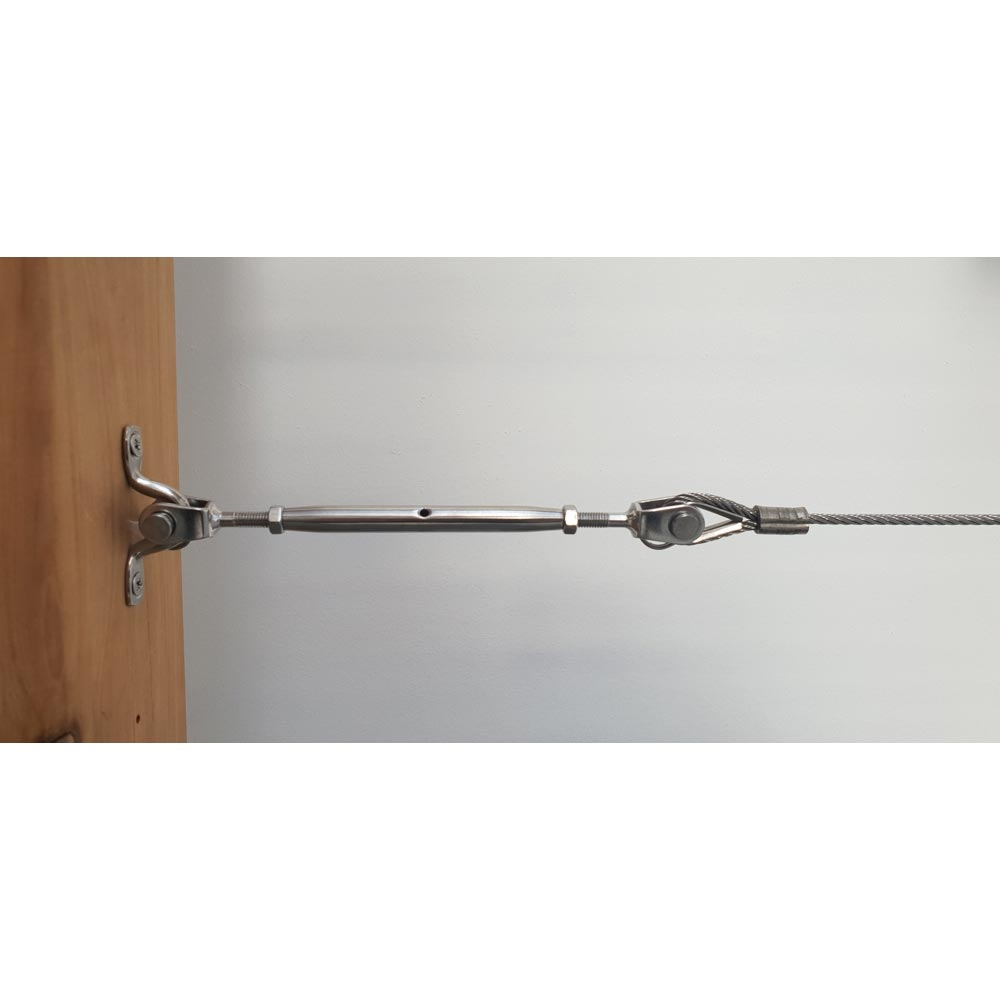
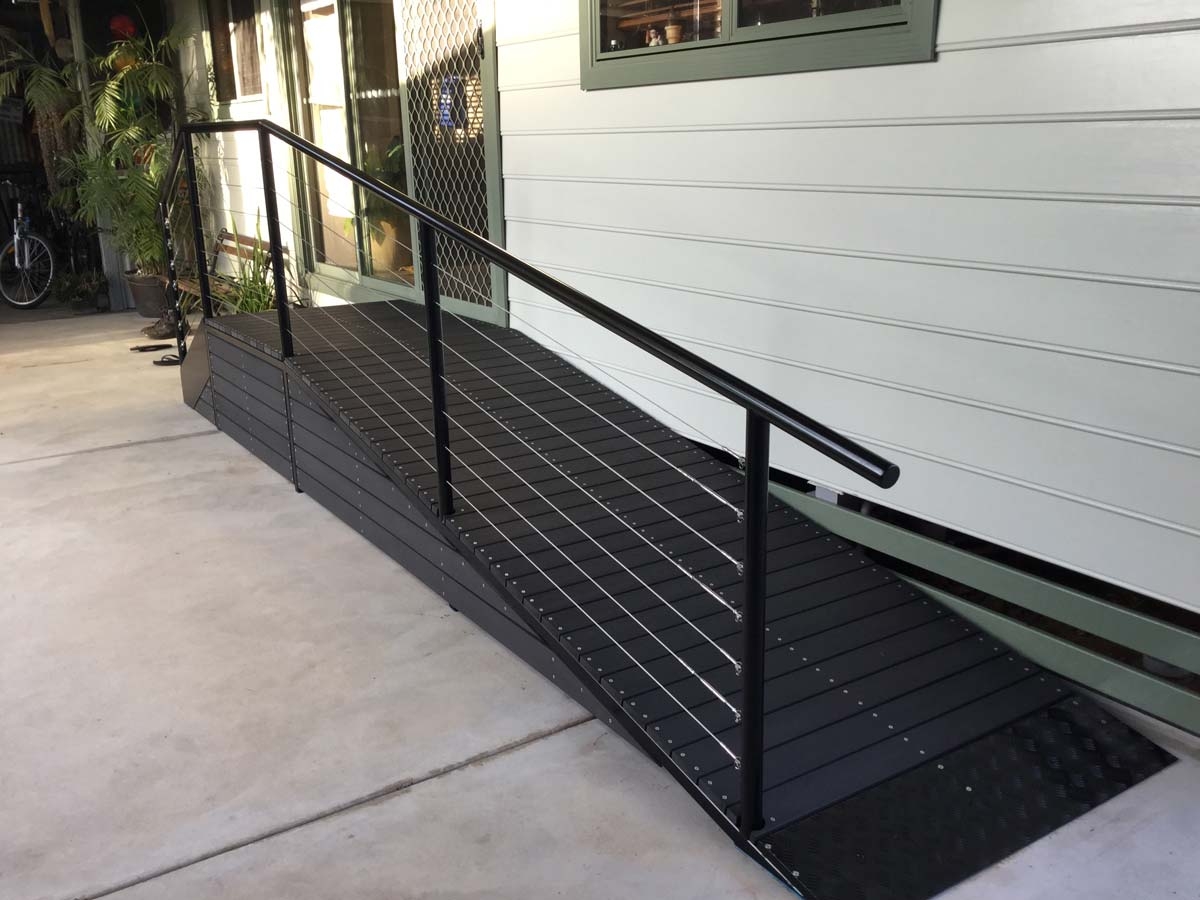
The saddle and pop-rivet (blind rivet) combination method has been around a long time in wire balustrading. Most commonly seen with turnbuckles it allows closed eye ends to be fixed onto metal posts.
Installation of these is fairly straightforward and if you've collected tools for any amount of time you will likely have a pop-rivet gun. The saddle and rivets are relatively cheap and offer a solution for any pinned, hooked or closed eye ends of wire balustrading fittings.
Saddles come in different sizes, the M# referring to the thickness of the saddle, e.g. M5 for 5mm thickness. Pop-rivets also come in a variety of lengths to suit many different wall-thickness posts, and widths to add strength to the fixing point. Make sure you match the rivet to the wall thickness post you have.
Saddles and Pop-Rivets Installation

Saddle and Pop-Rivet Kits
Straight & Angled Sections
Stainless Steel

Straight & Angled Sections
Stainless Steel

Straight & Angled Sections
Stainless Steel

Straight & Angled Sections
Stainless Steel

Straight & Angled Sections
Stainless Steel

Straight & Angled Sections
Stainless Steel

Straight & Angled Sections
Stainless Steel

Straight & Angled Sections
Stainless Steel

Straight & Angled Sections
Stainless Steel

Hex Sockets & Rod/Dome Terminals
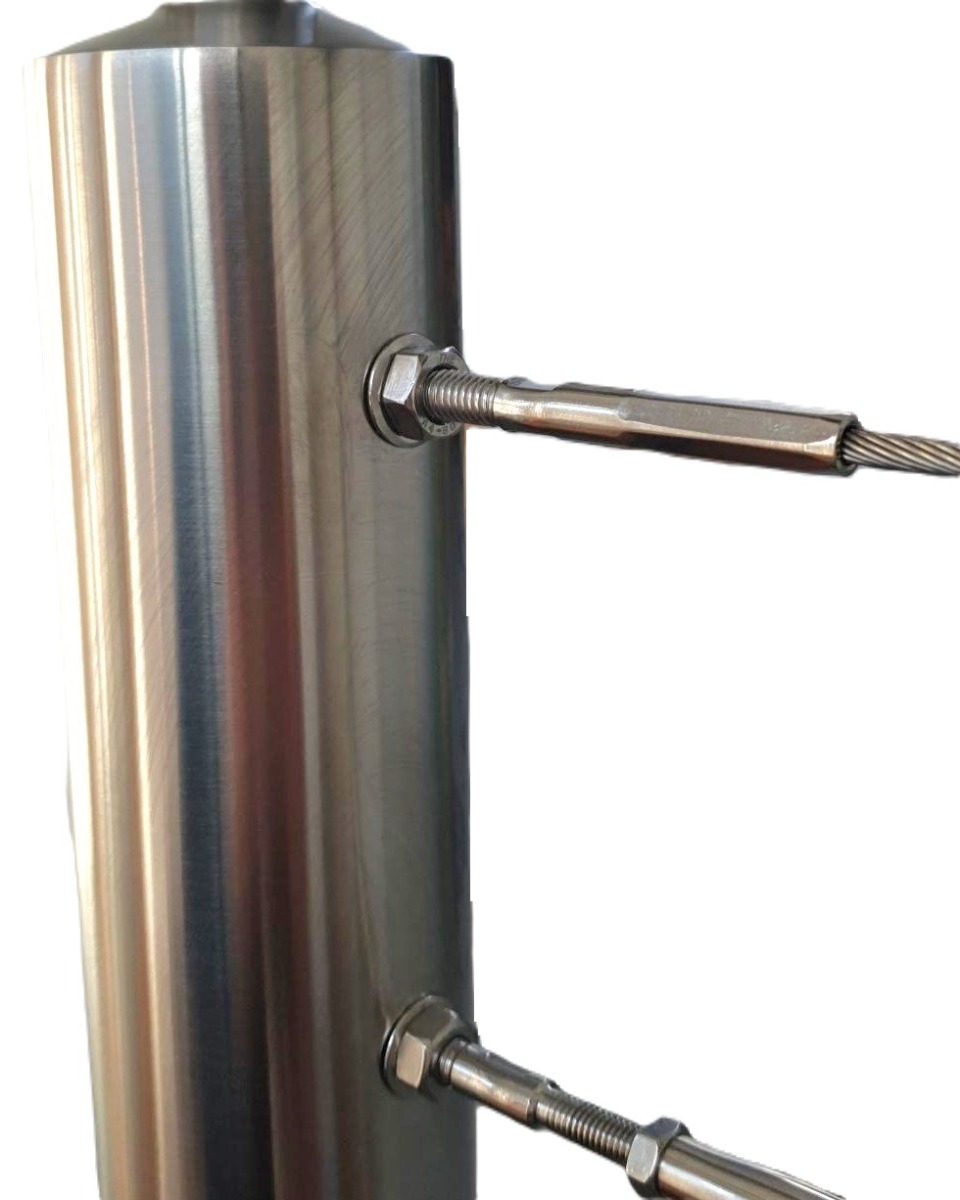
If you need to run the wire through the posts, rod/dome terminals and hex socket tensioners are your options. They can potentially be a way of hiding/minimising wire balustrading on the inside faces, although will be visible on the outside faces of the post. They can be coupled with angled bevelled washers to work on stairs/ramps.
Hex socket tensioners have an internal right-hand thread that you attach swage stud terminals to. Hex sockets are not swaging points for wire, you combine them with terminal ends. By adding various length swage stud terminals you can run through wider posts. The thread allows you to tension the wire from the outside with an allen key.
Rod/dome terminals are the swaging points for the wire. There is no tensioning capability on them. You often add a tensioning capability to the other end of the wire.
Both these options require access to the outside of the post, if you don't have that you won't be able to install them. They also do not work in corners unless you offset them, anything long enough will clash into them within the post.
Hex Sockets & Rod/Dome Terminals Installations

Hex Socket & Rod/Dome Terminal Kits
Straight Sections
316 Stainless

Straight & Angled Sections
Stainless Steel

Straight & Angled Sections
316 Stainless

Straight & Angled Sections
316 Stainless

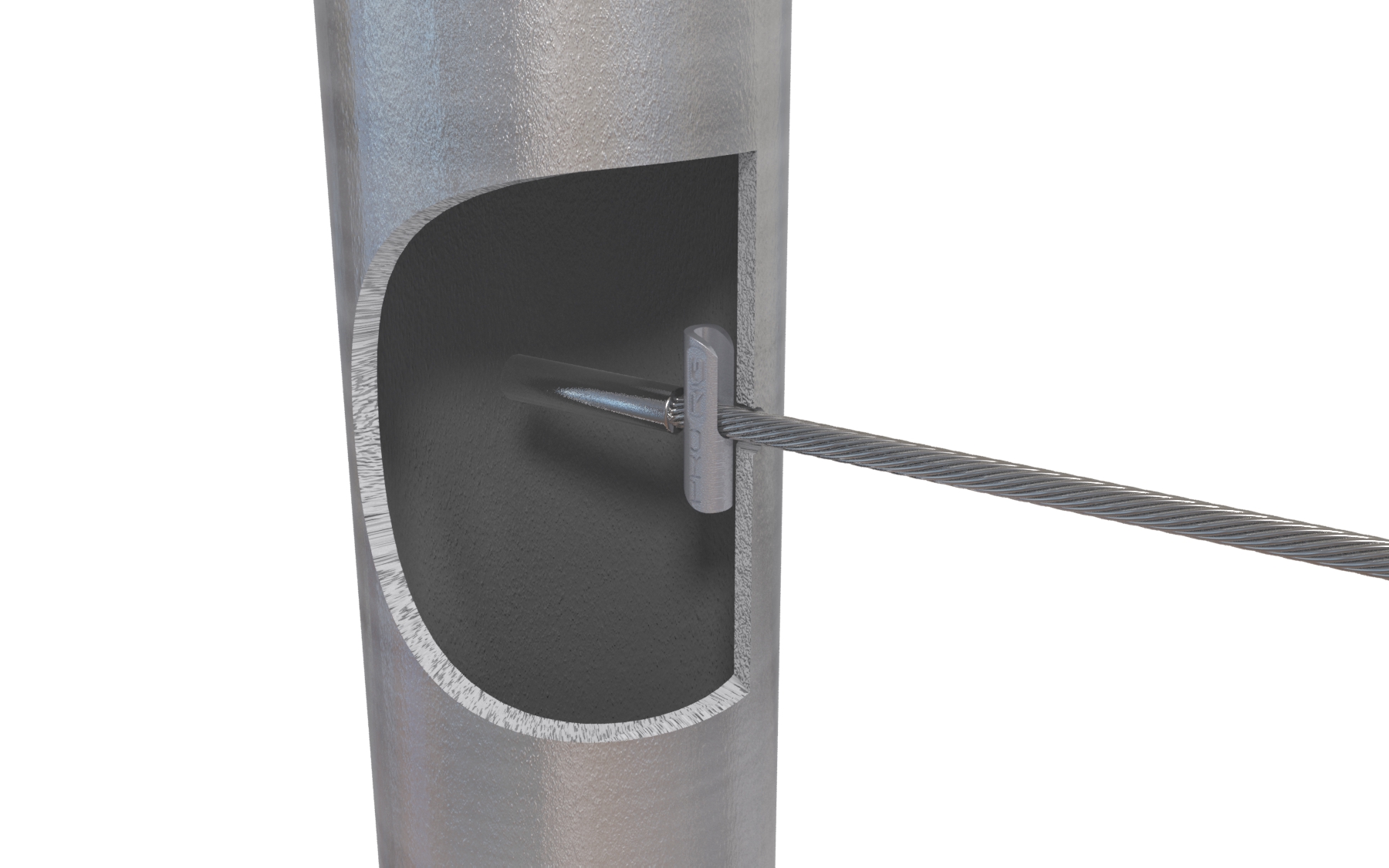
Flip Toggles
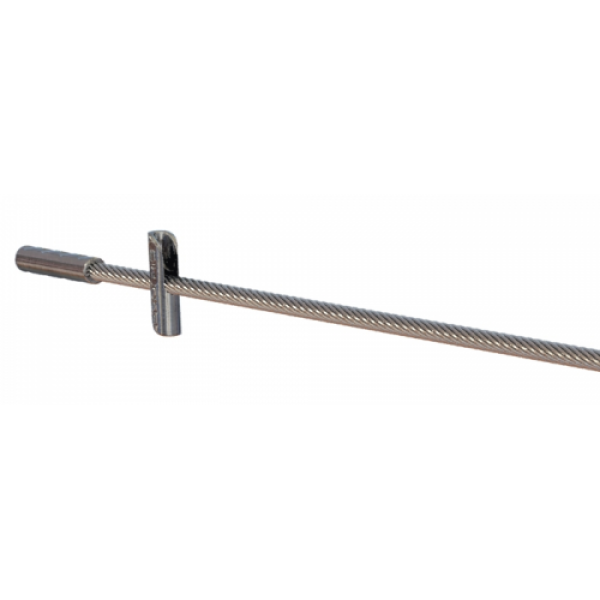
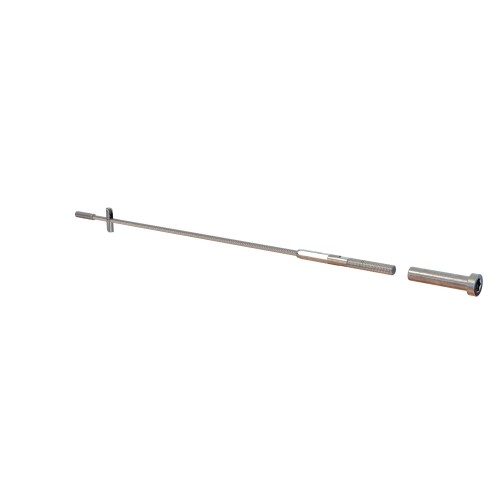
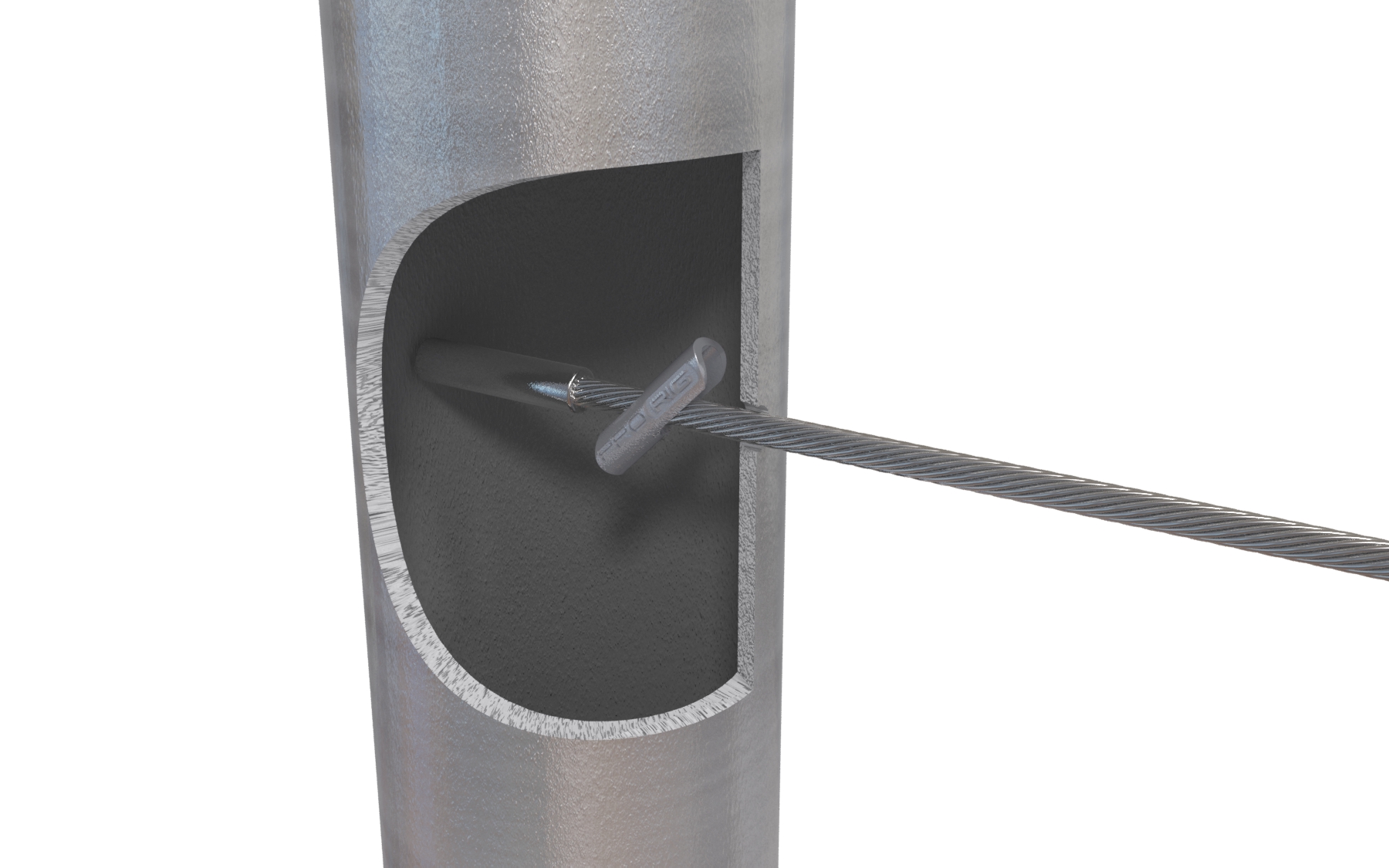
If you are looking for a completely hidden internal wire flip toggles could be your answer. The function the same way a flip lock nut does, the toggle flips down once inserted inside the post and holds against the inside wall once under tension. This is a great option for posts that have very thick walls that would make rivnuts, rivets and even flip lock nuts an issue. The flip toggle also allows for pivoting making it suitable for stairs and ramps, although the pivoting is inside the wall of the post so you will have to account for the wall thickness to get desired angle.
Paired with a swaged terminal end to make sure the toggle doesn't completely fall off the wire, the design inserts into the post with no exposed fittings.
The toggle end is not tensioned, so it needs to be paired with a tensioning option at the other other end of the wire. This could be any number of fittings but paired with a Hex Socket Tensioner setup it allows for inside-to-outside wires.
Flip Toggle Installation
Flip Toggle Systems
Straight & Angled Sections
Stainless Steel
Secret Mention
ok... so it's not that secret but it looks it!
Ezi-Crimp Systems
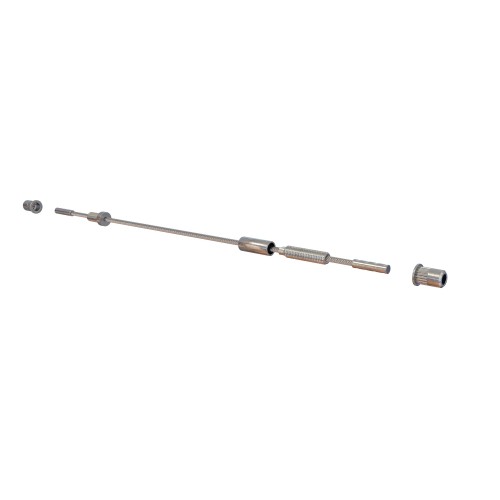
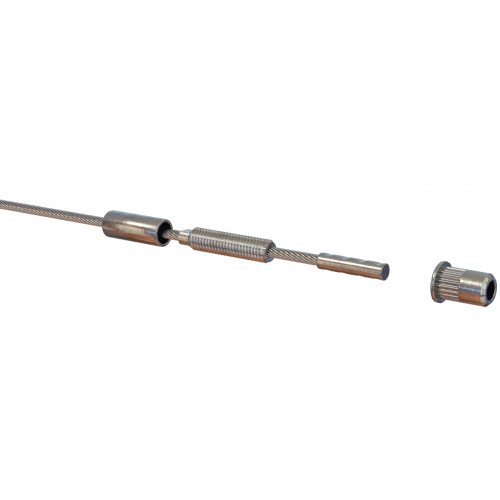
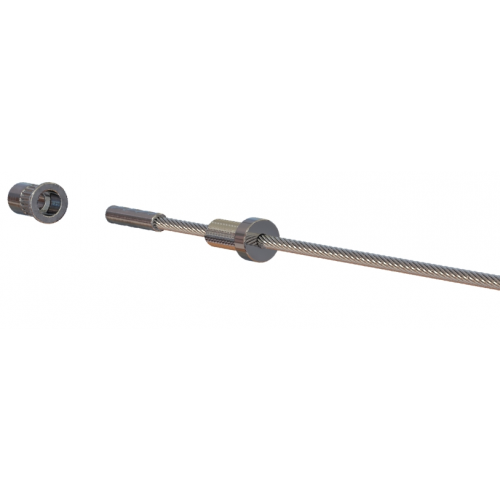
If you are looking for the most streamlined, hand swaged system available you have to consider the Ezi-Crimp wire balustrade kit.
Ok, technically it fits within the RivetNut category as it uses M8 RHT rivetnuts to install into the post. However, the system is designed to be tensioned while displaying as minimal a profile as possible, less than that of a swage stud terminal setup. It does not work on stair sections however.
It's an option for those looking to minimise the look just that little bit more of their balustrading.
Ezi-Crimp System (Metal)
Ezi-Crimp System
Straight Sections
316 Stainless

and that's a wrap!
There are a few different options when it comes to fixing wire balustrade into metal posts. Each has a variety of aesthetic, ease-of-install and cost factors to it that you should consider when looking at purchasing wire balustrade.
If you want to learn more about wire balustrading see more below.
How to Install Wire Balustrade & FAQ
If you are looking for more helpful information of wire balustrading you can check out our How to Install Wire Balustrade & FAQ.
Wire Balustrade Kits: Metal
If you are looking for purchase wire balustrading for your (or your clients) home or commercial site, you can check out our Metal Wire Balustrade Kits.
Check out the Better Home Blog
If you are looking for more helpful information of wire balustrading you can also check out our blog.
Posts for Wire Balustrade
If after all this you decided you would rather have the rivet nuts pre-installed or the threads pre-tapped, you can check out our range of stainless posts.